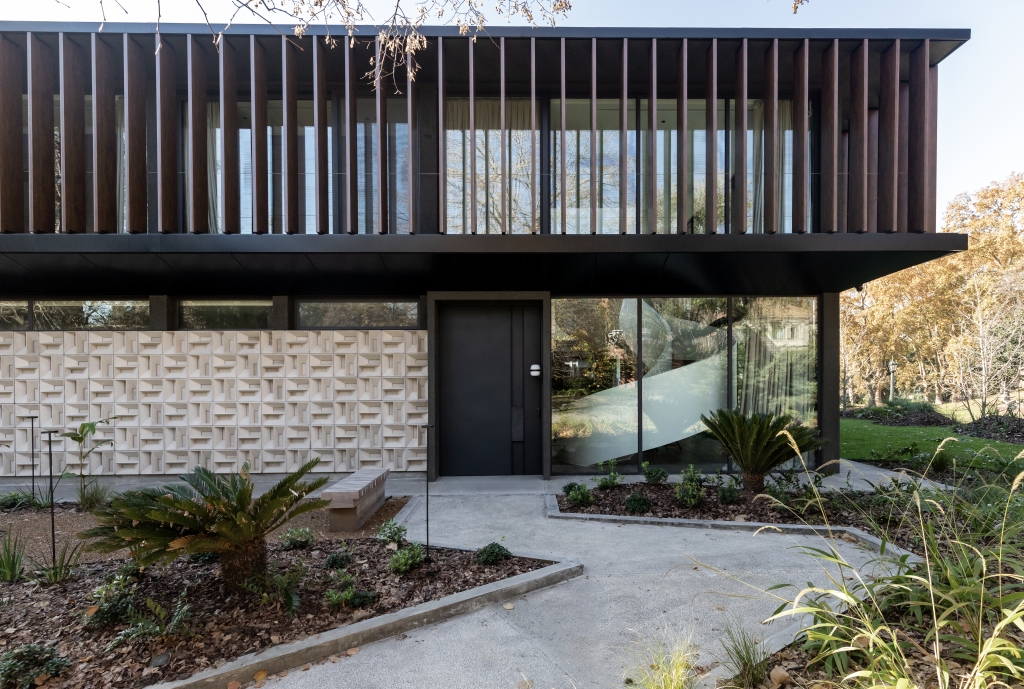
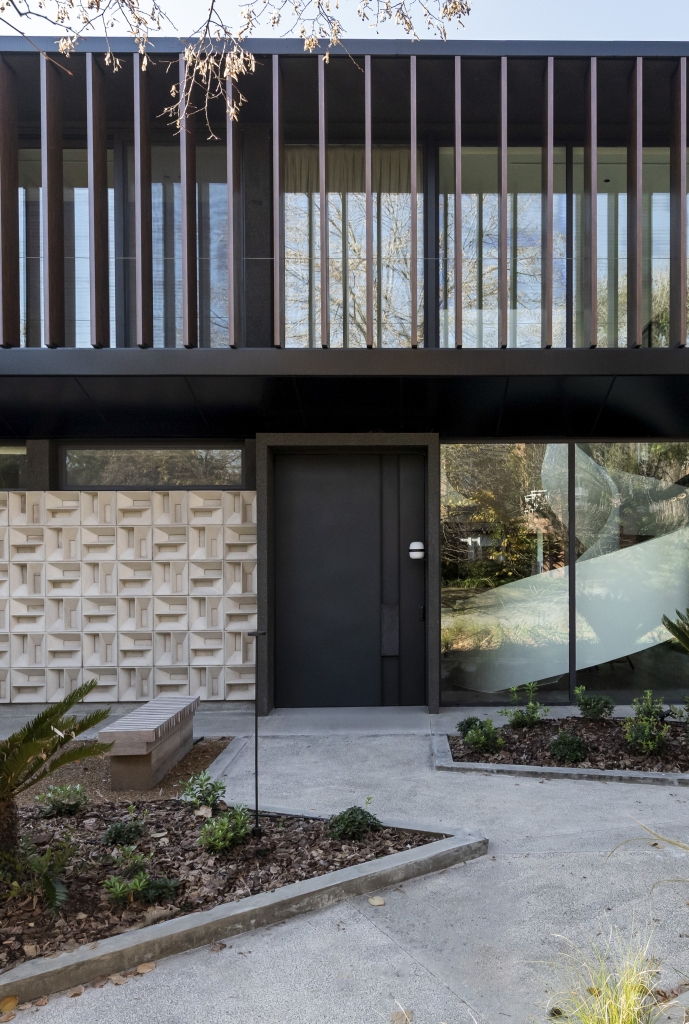
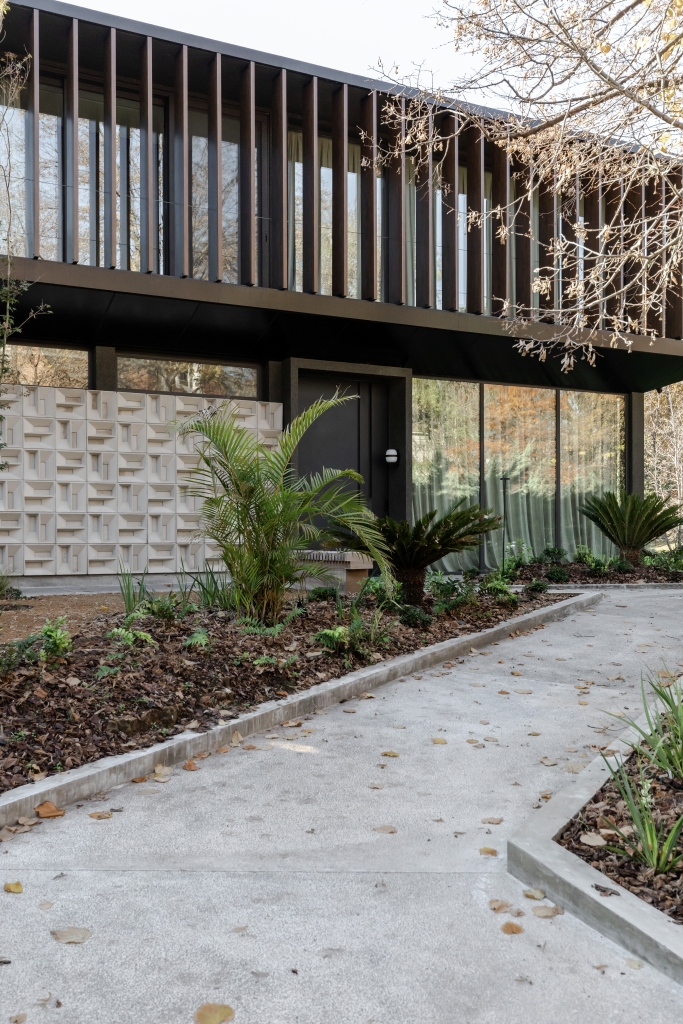
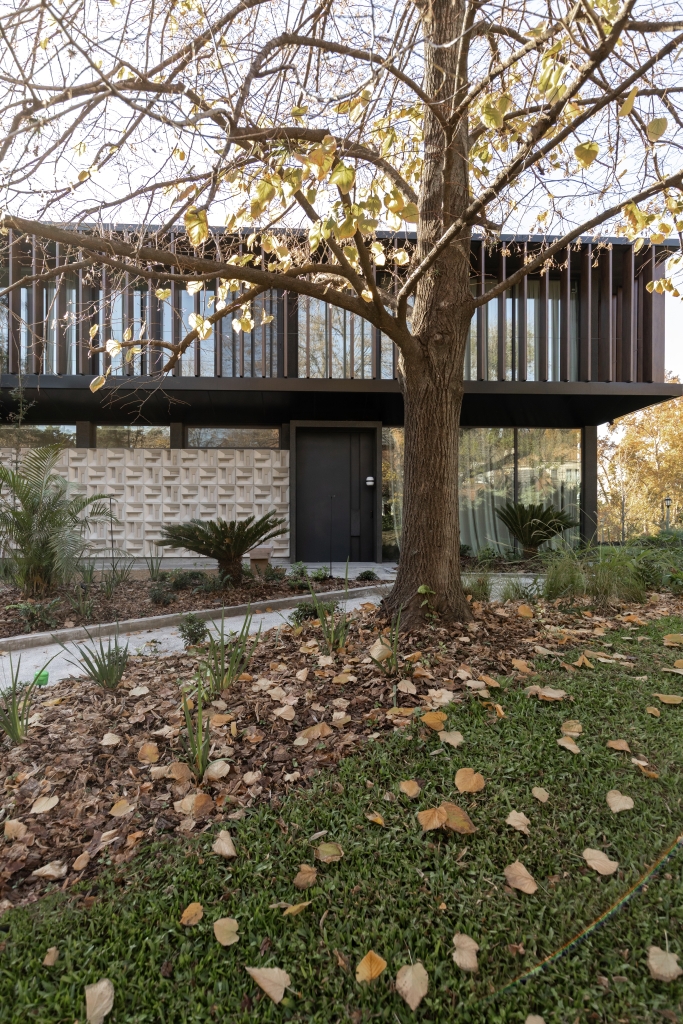
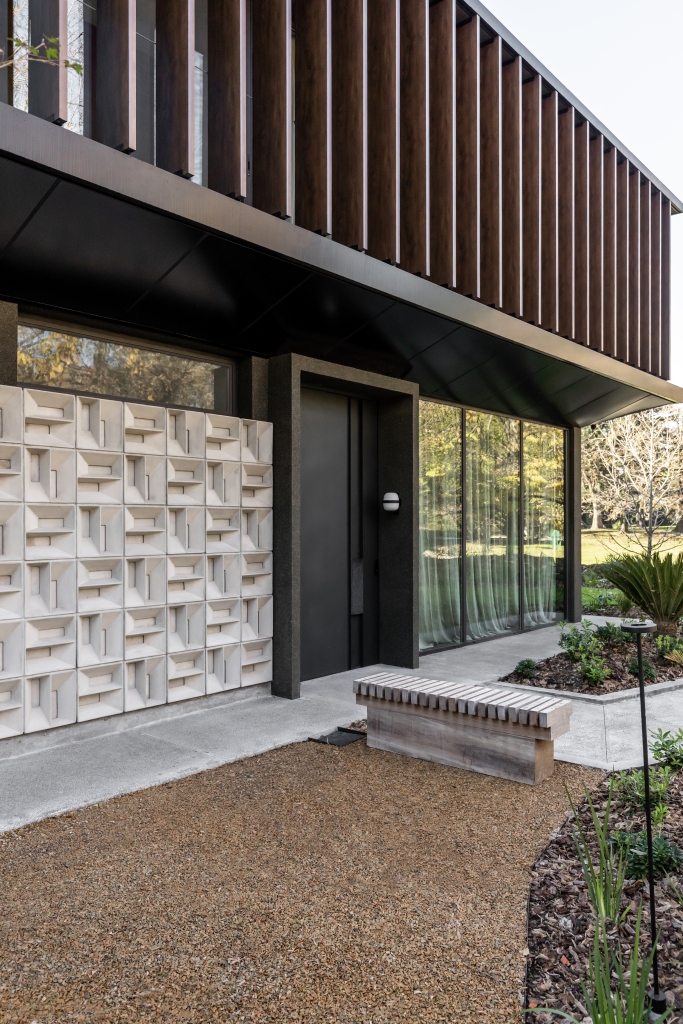
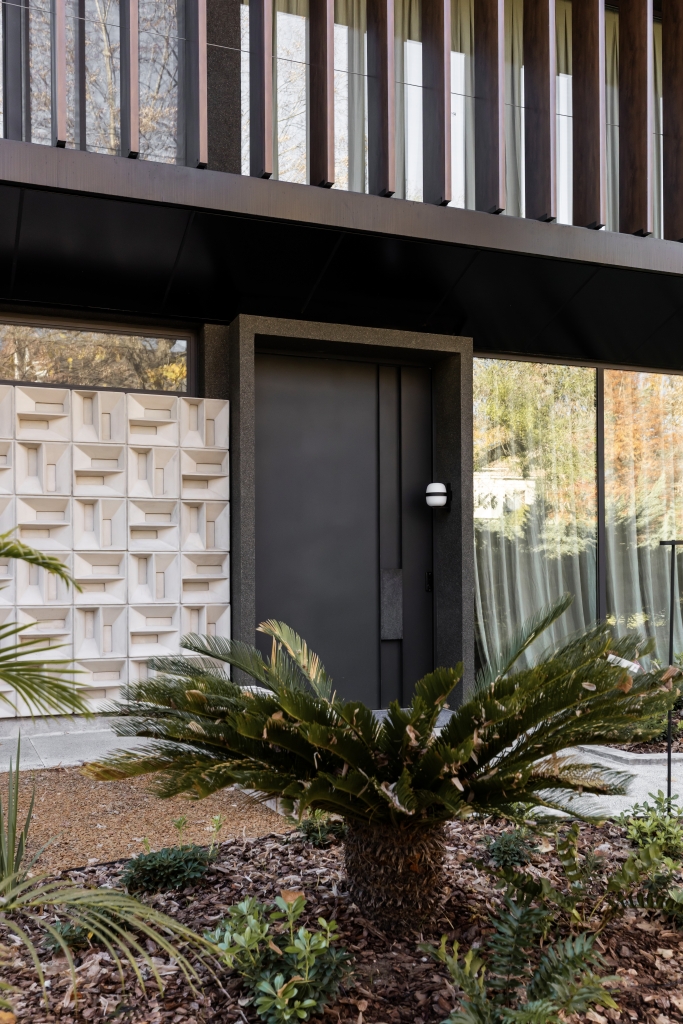
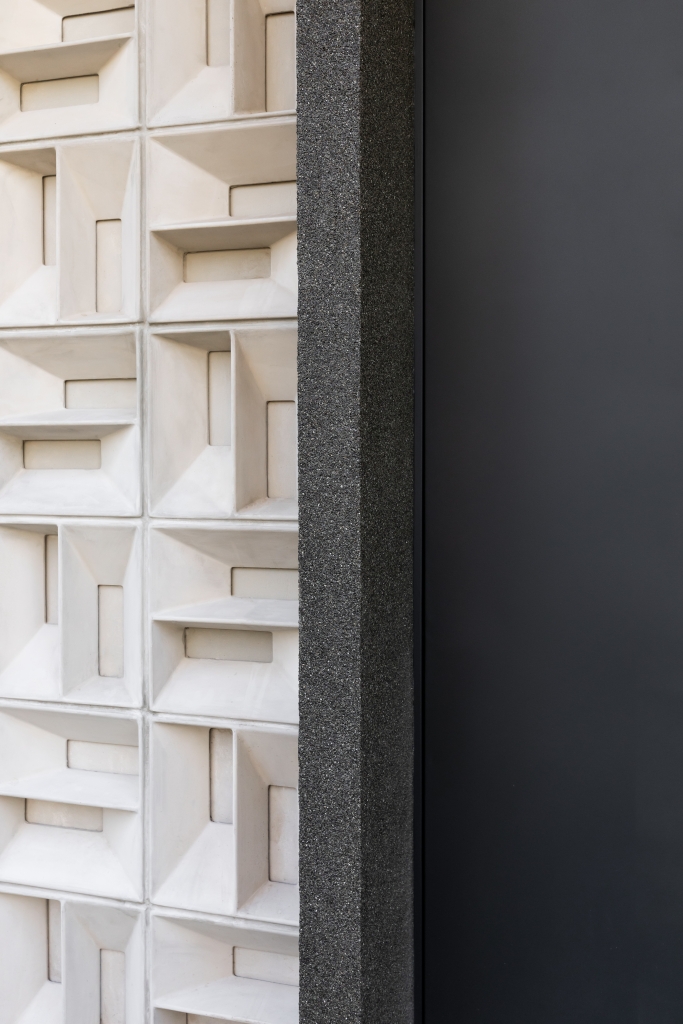
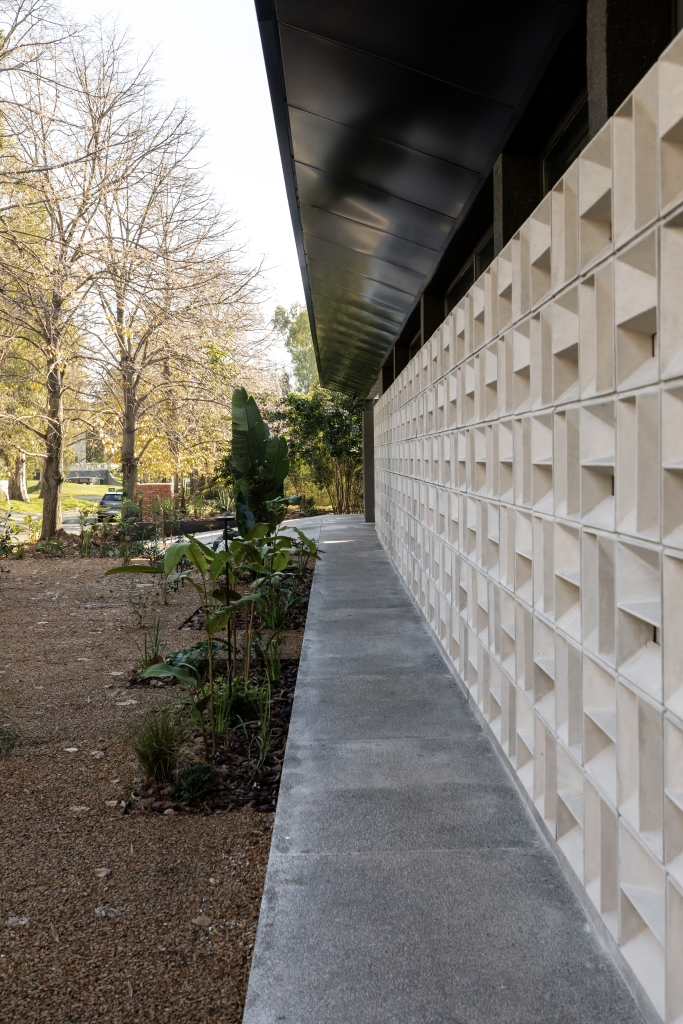
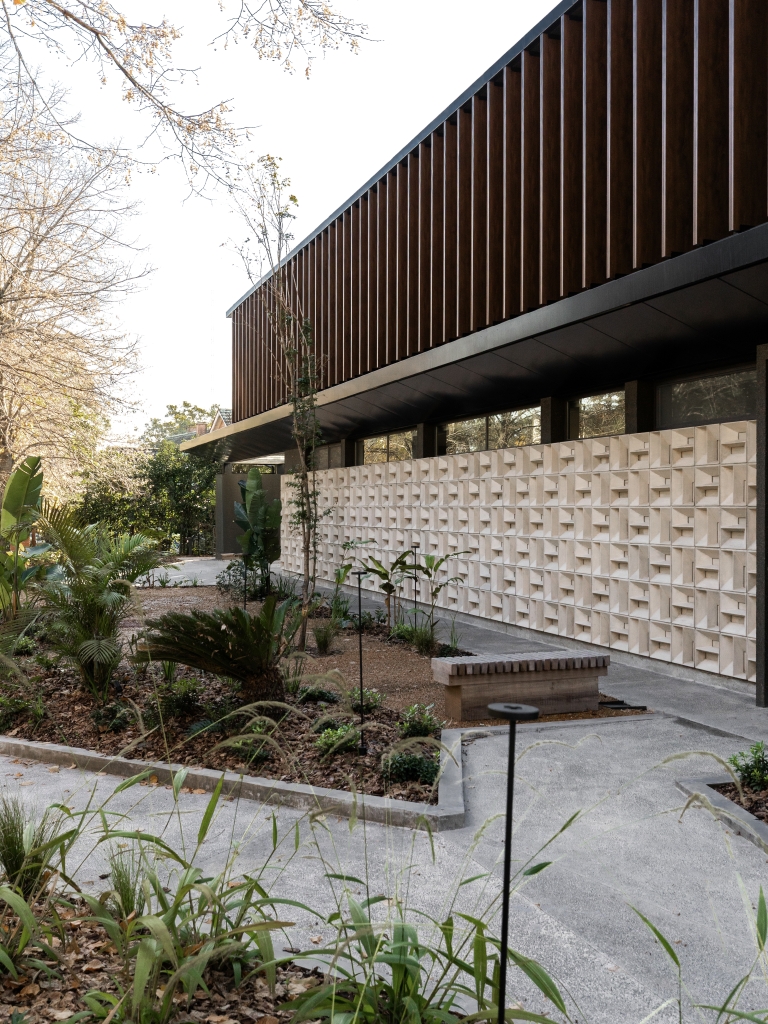
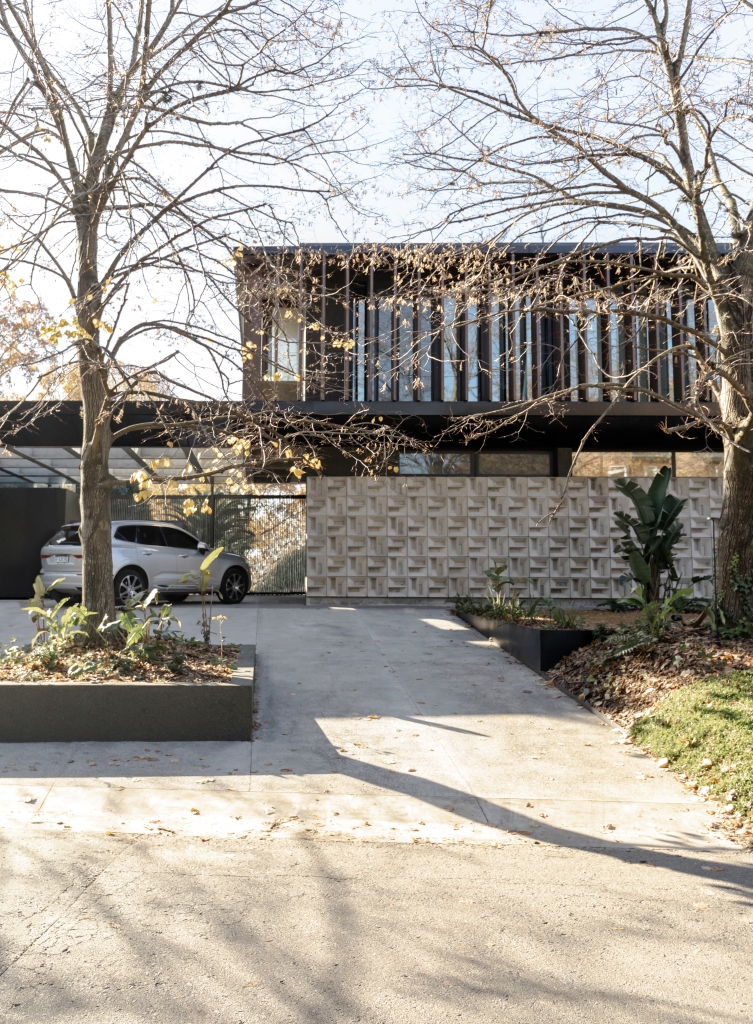
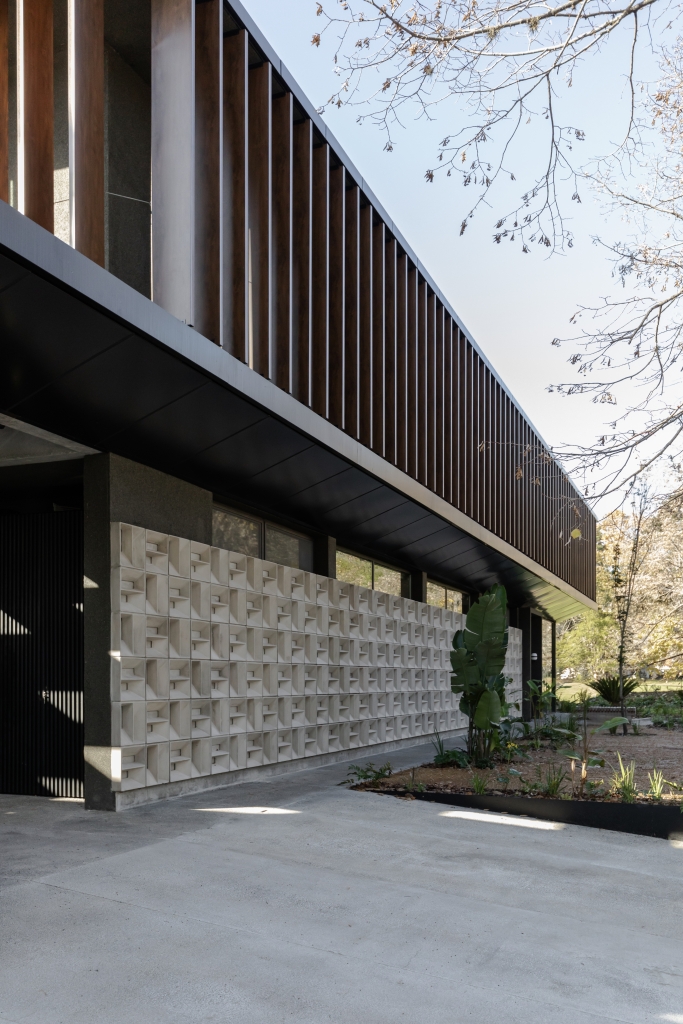
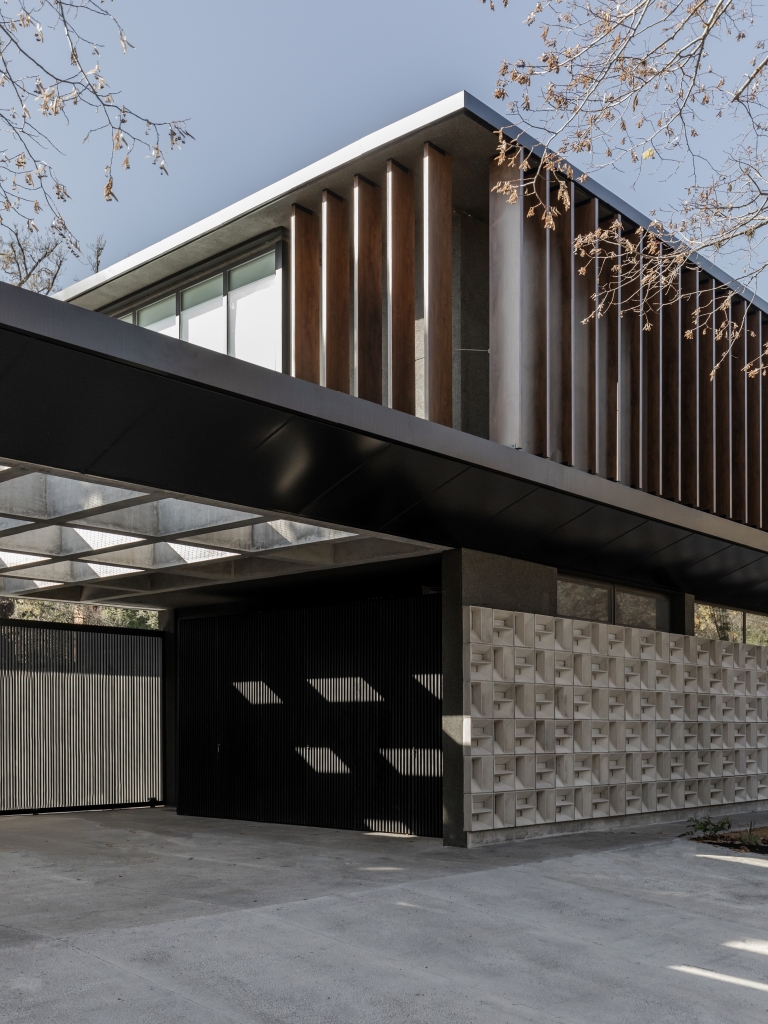
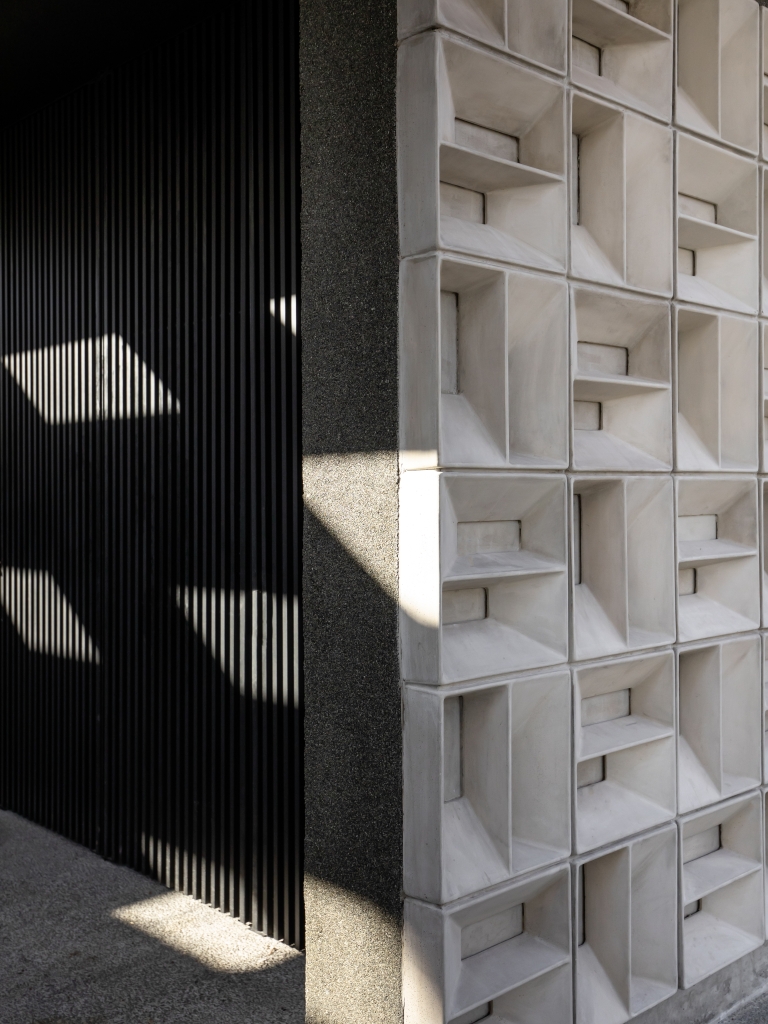
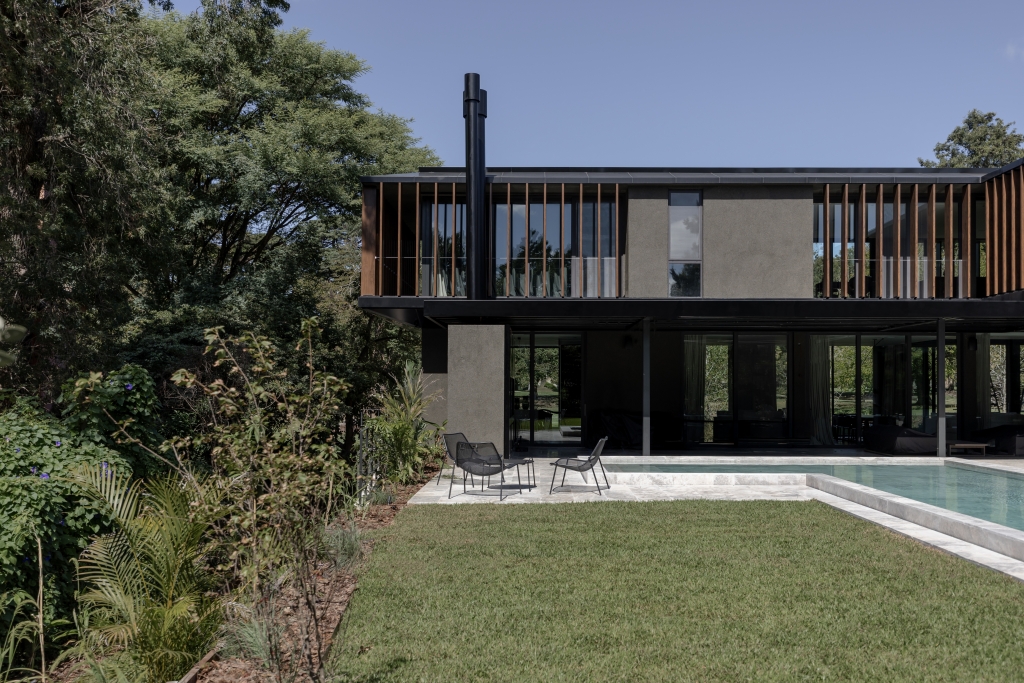
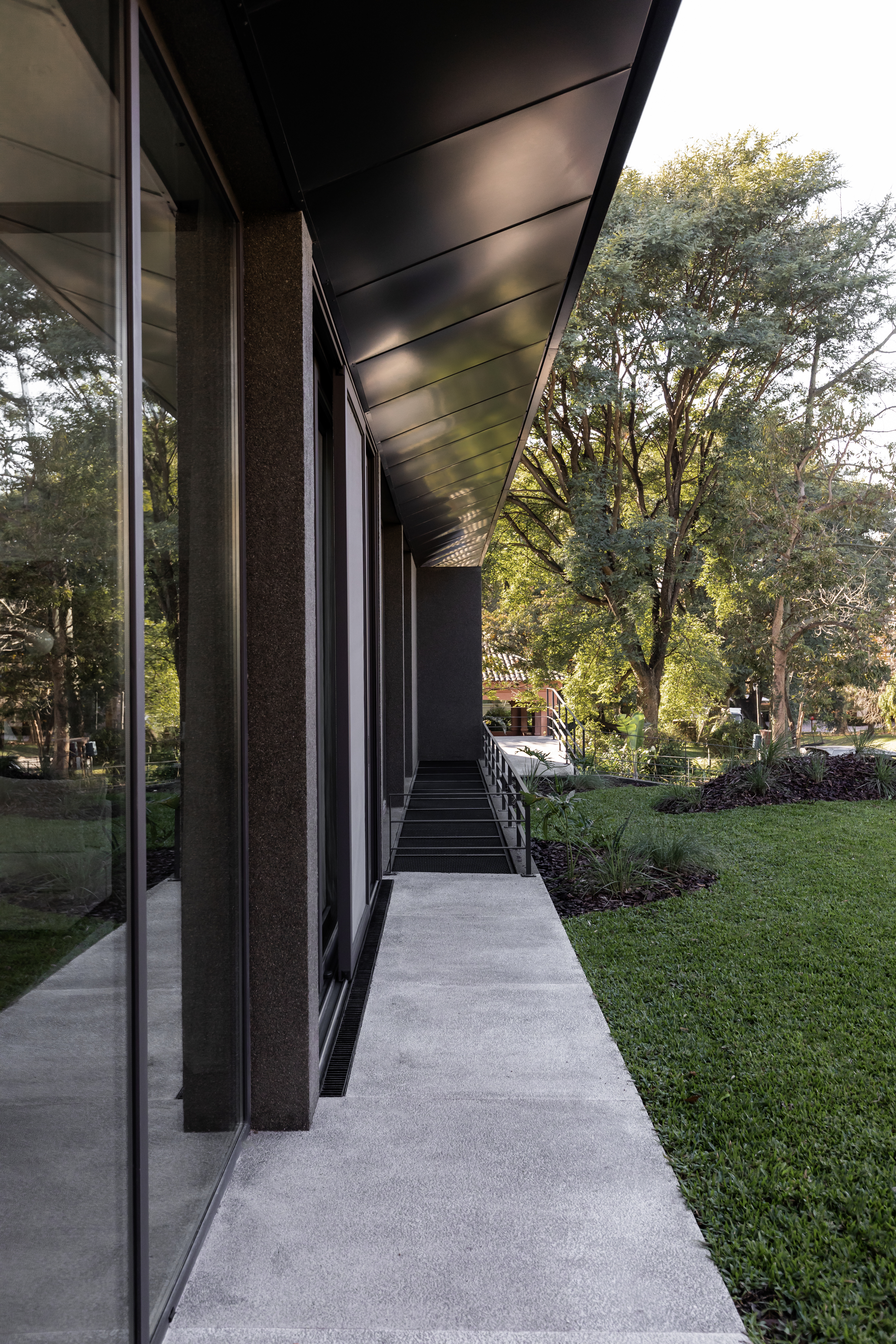
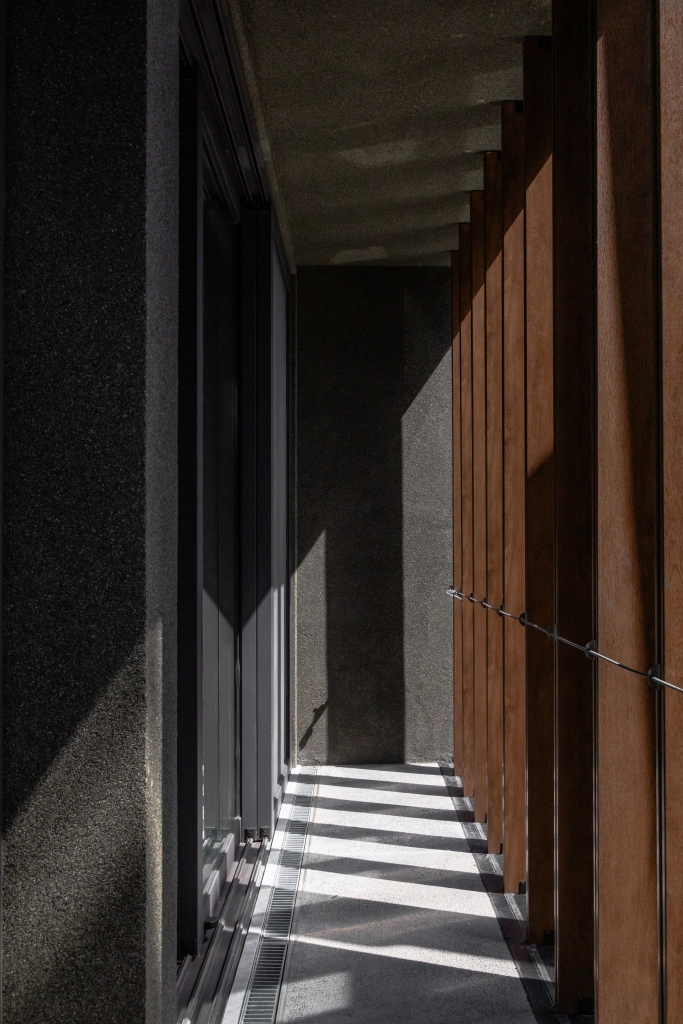
The house is located in a gated community in Buenos Aires, on a privileged plot due to its position facing a large communal green area. This landscape condition became the driving force of the design: the house opens completely towards this front, maximizing views and capturing natural light, while on the side facing the internal street of the neighborhood it presents itself as more closed and controlled, protected by a cobogó wall that, in addition to providing privacy, defines the character of the façade.
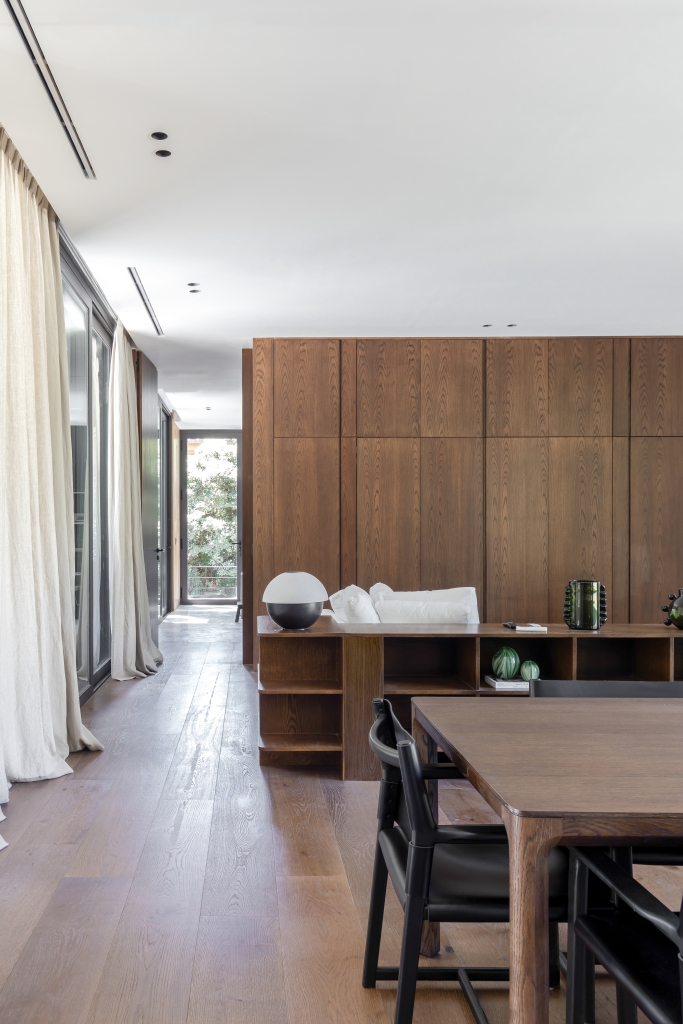
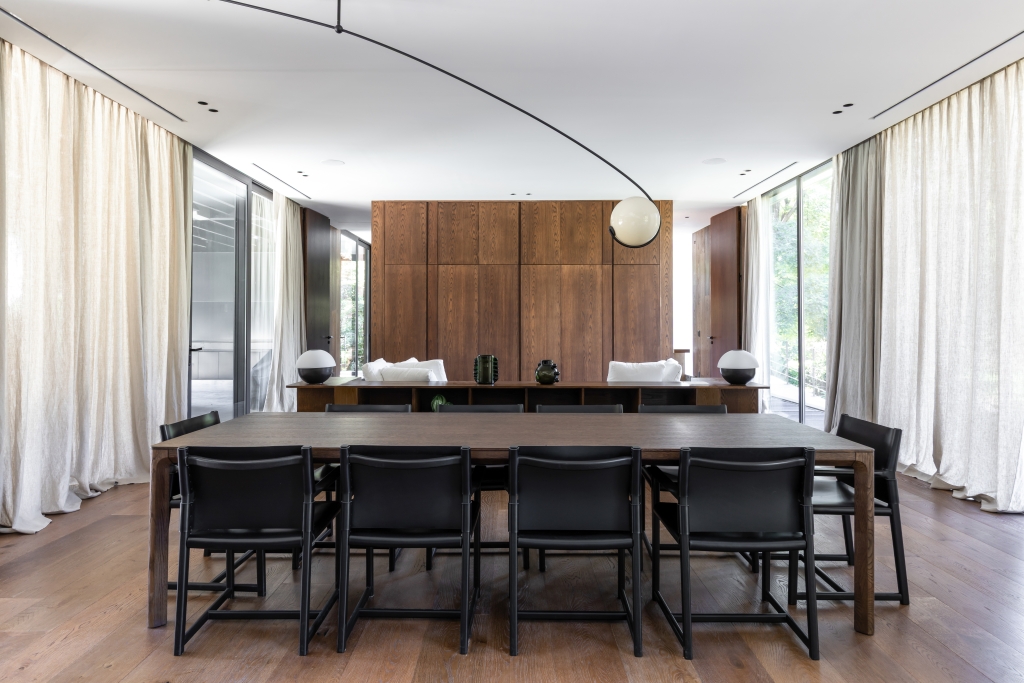
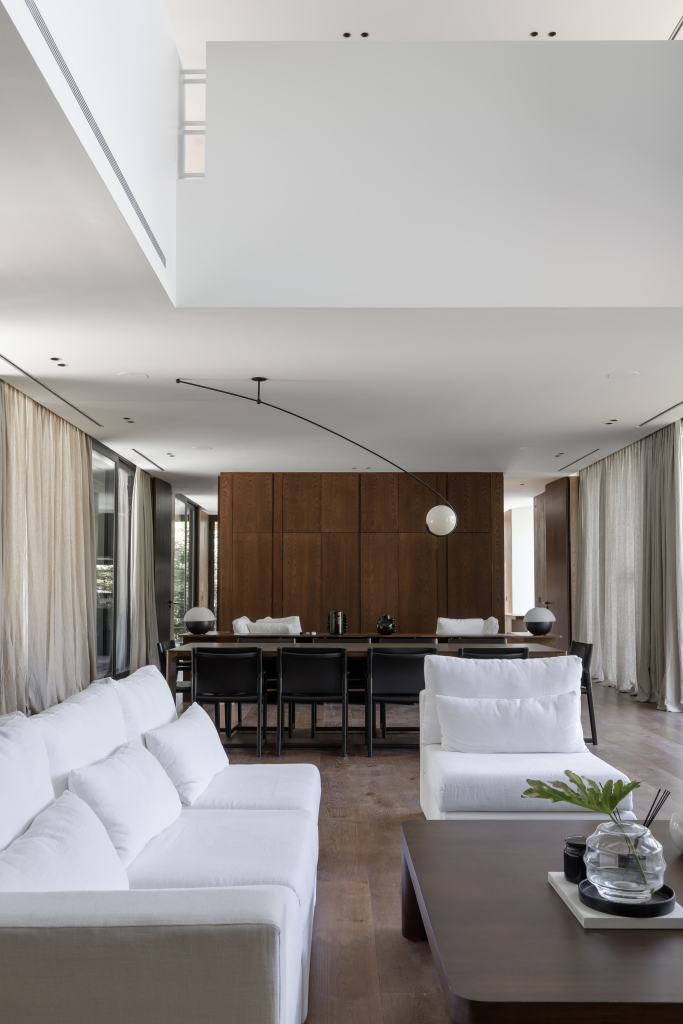
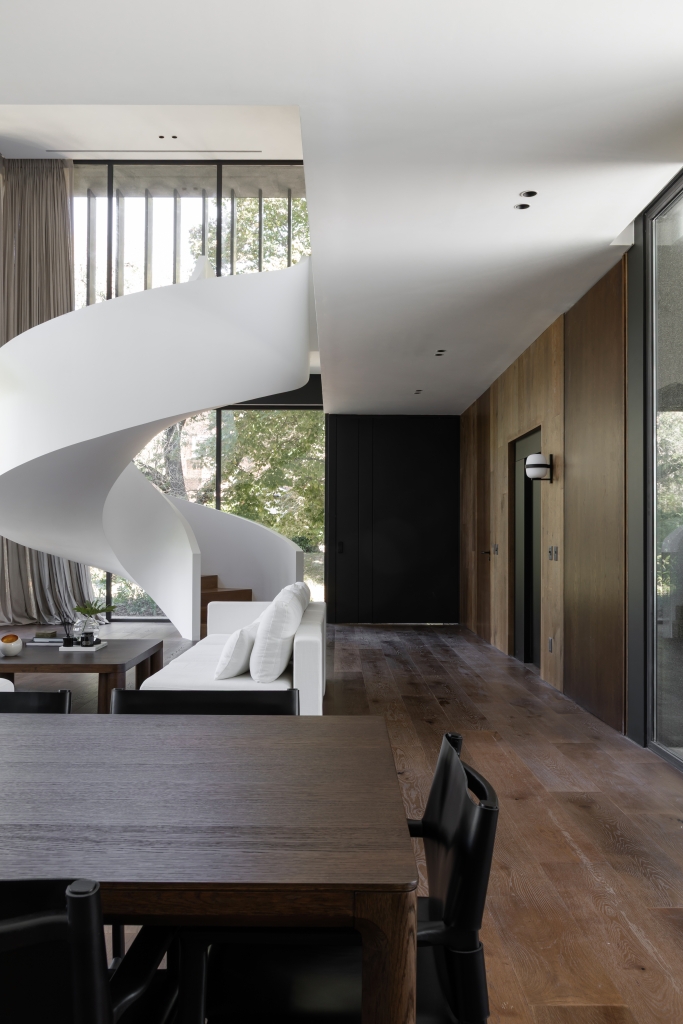
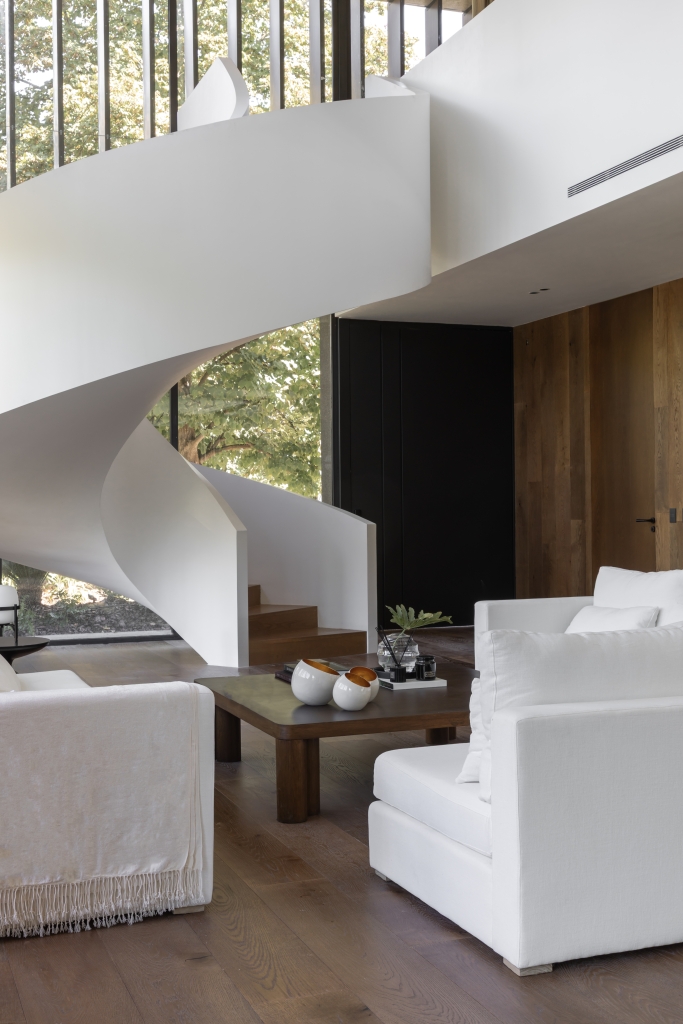
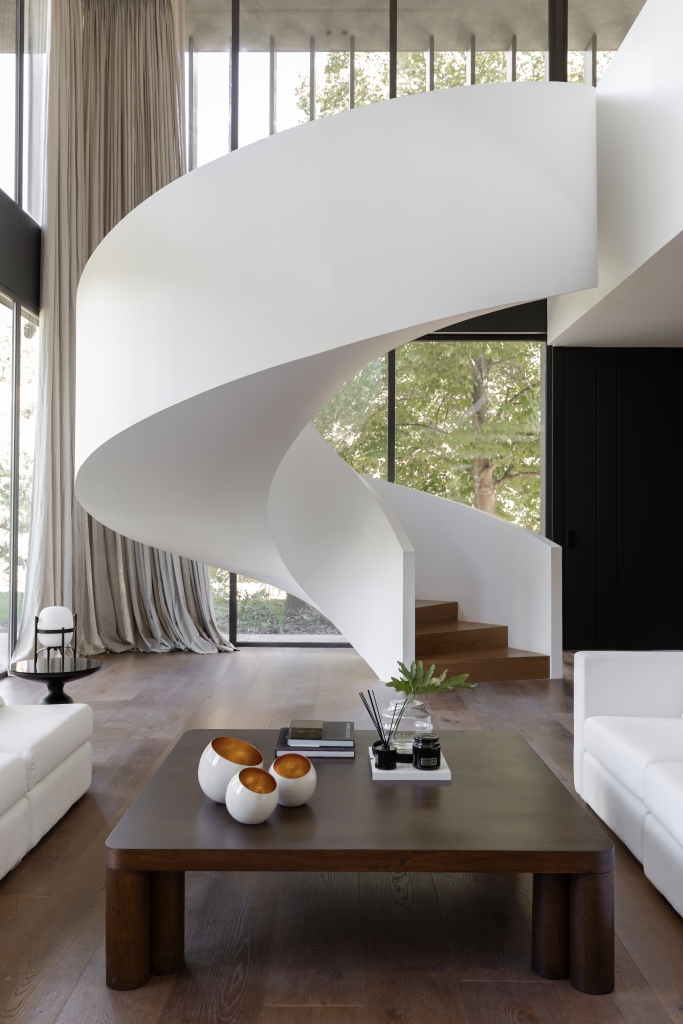
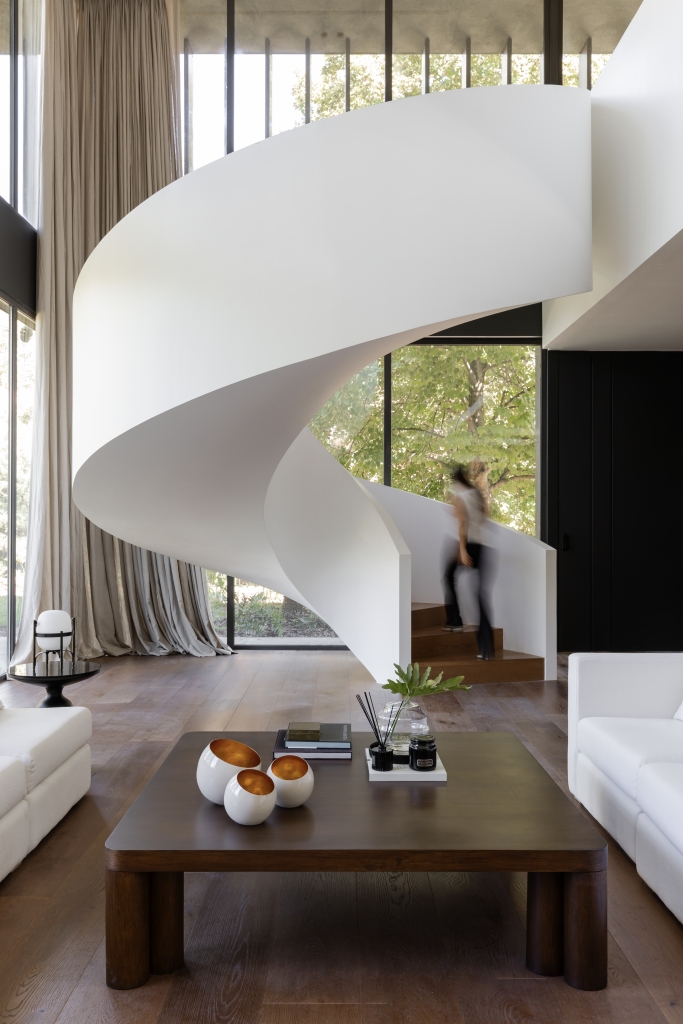
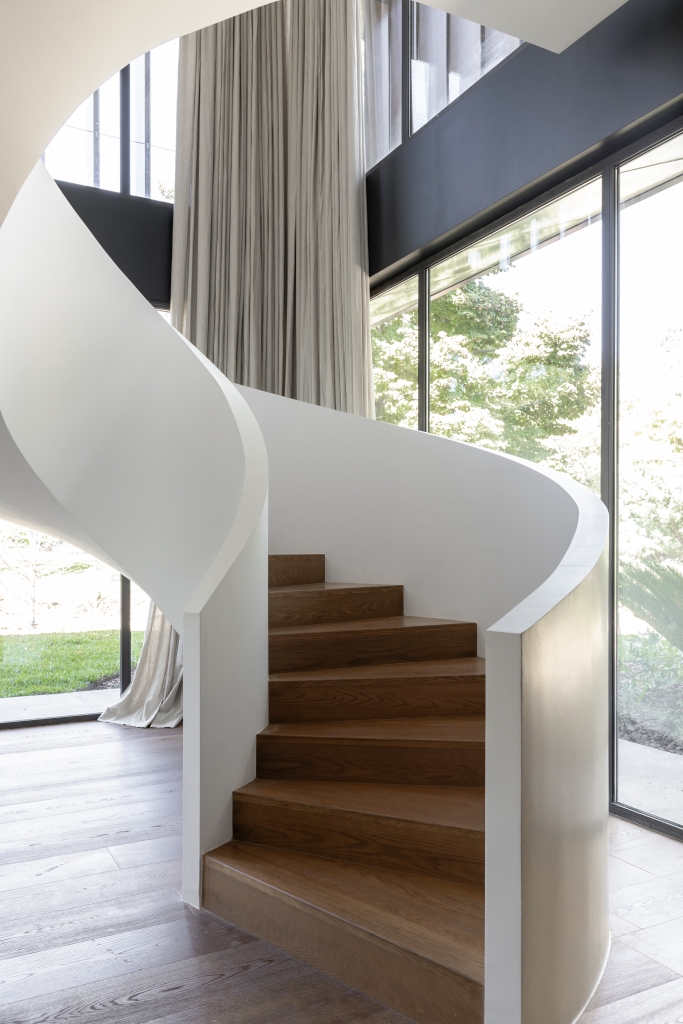
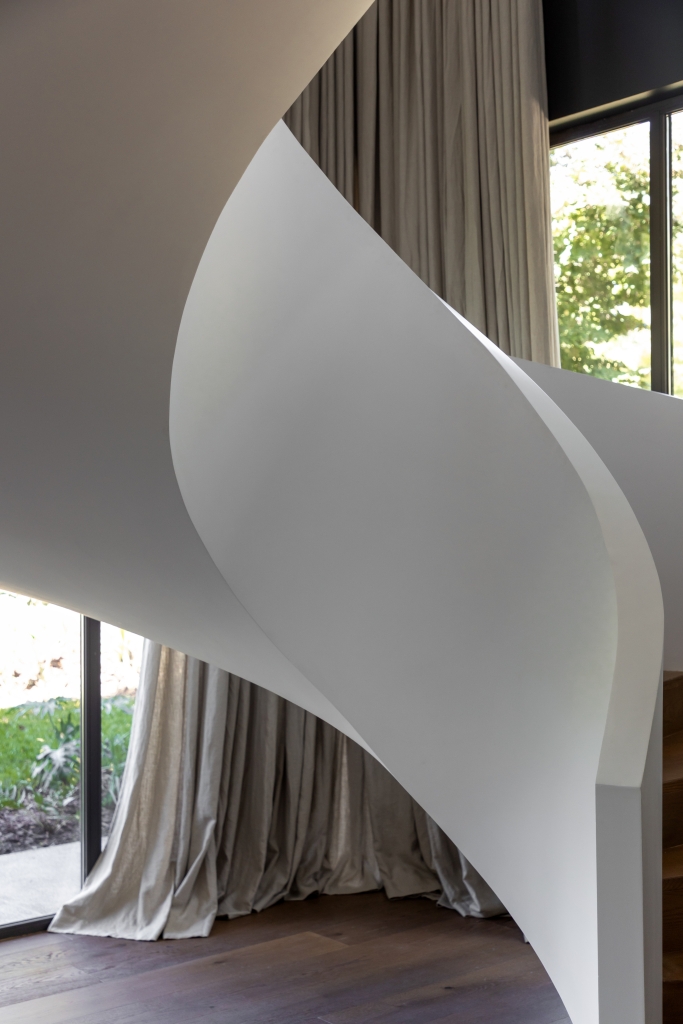
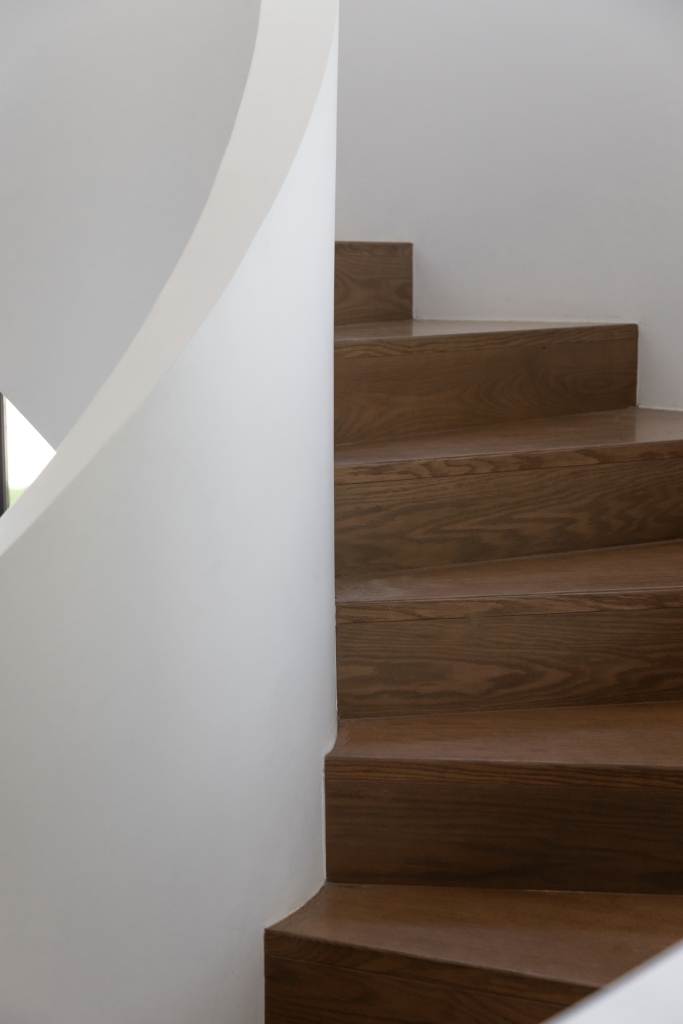
The project was conceived for a client with an active social life and two teenage children, leading to the adoption of an “L”-shaped floor plan that allows for a clear sectorization of functions and the creation of an entire wing dedicated to recreation, including a TV room, games area, bar, and music room. The main wing accommodates the spacious living–dining room, which fully integrates with the park through floor-to-ceiling glass enclosures, blurring the limits between interior and exterior. The space is accompanied and defined by an imposing sculptural staircase, which becomes the central feature of the interior and connects the leisure-filled ground floor with the private upper level.
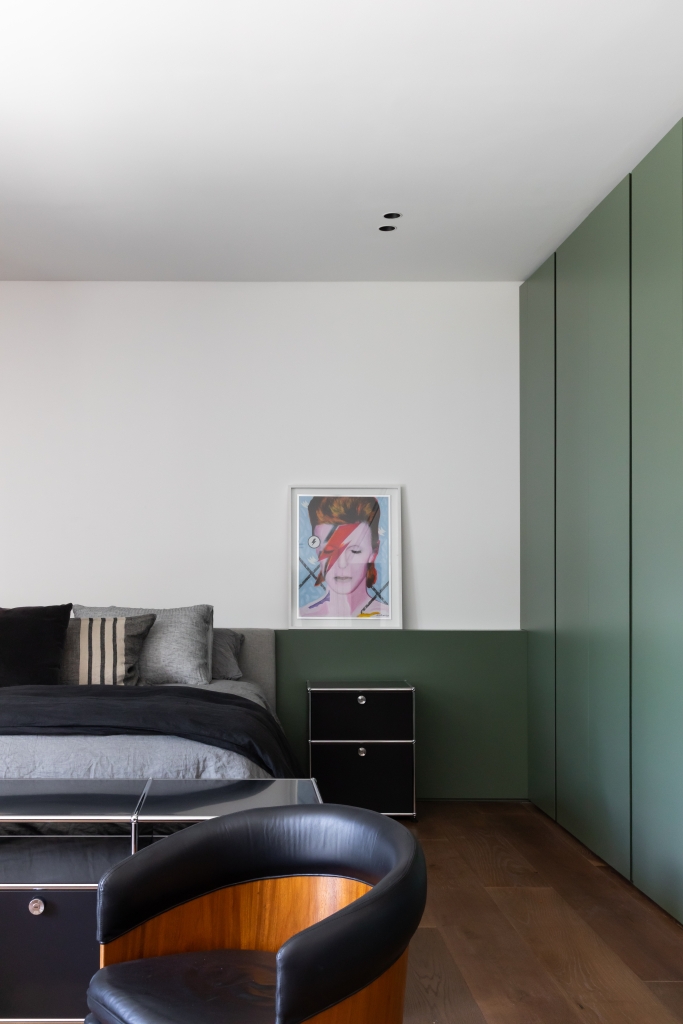
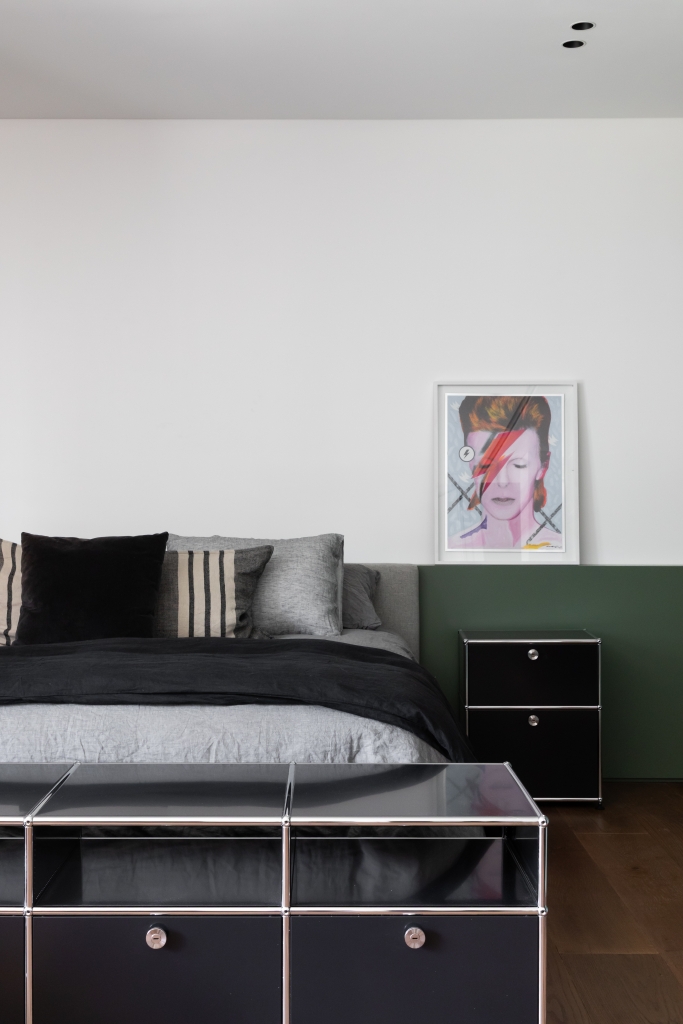
The upper floor houses the en-suite bedrooms, each conceived as mini-apartments with kitchenette, study, and walk-in closet. The master bedroom opens strategically towards the park with framed views, while the children’s suites overlook the inner garden, avoiding crossed views and ensuring privacy.
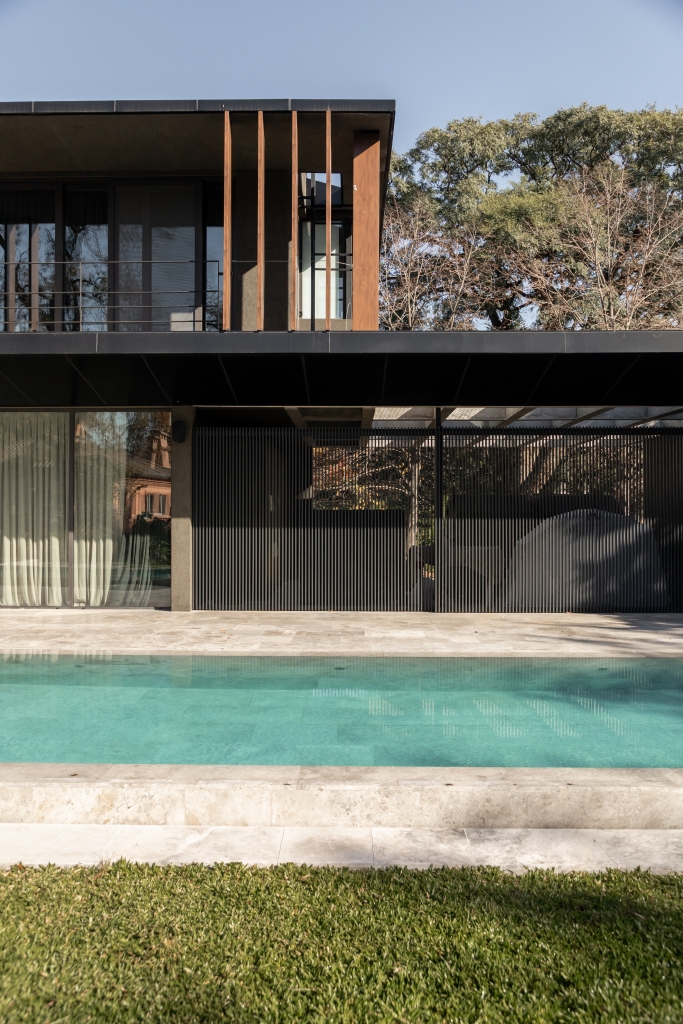
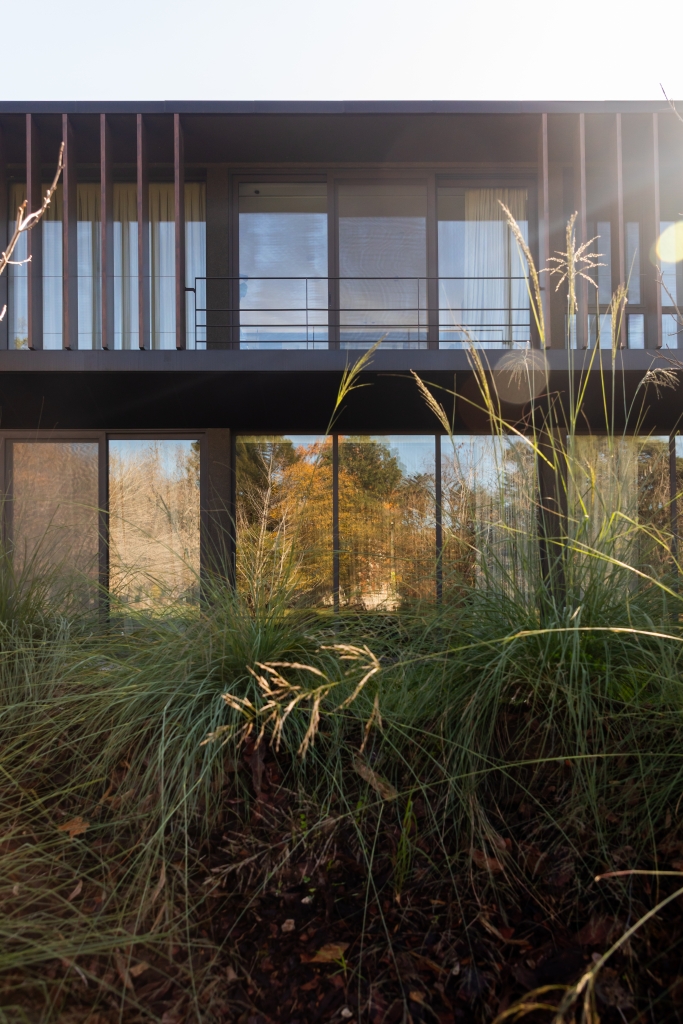
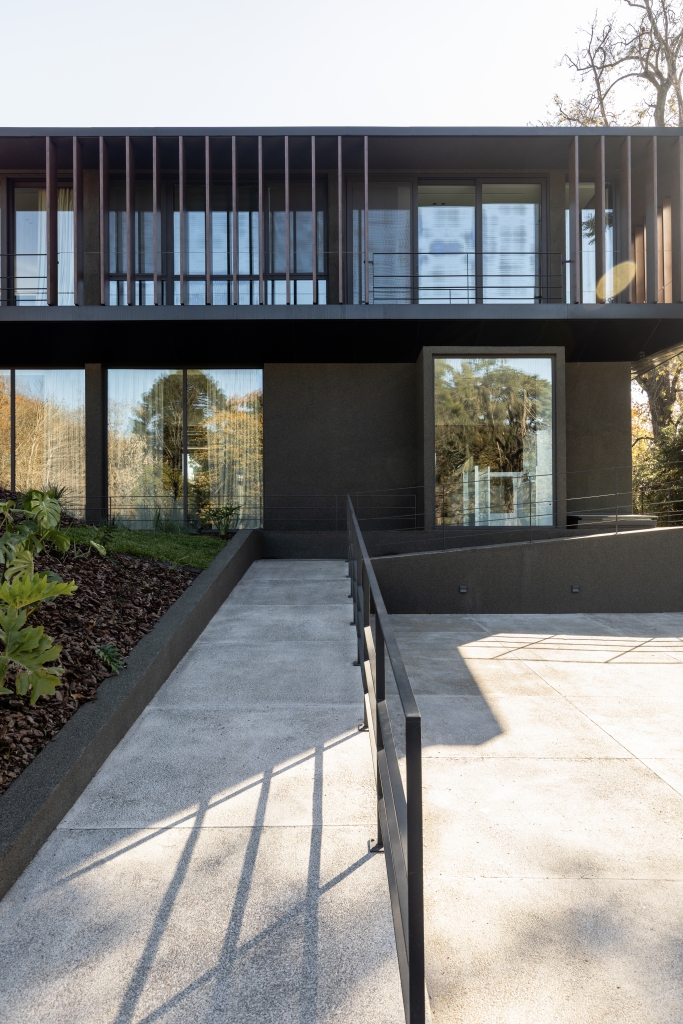
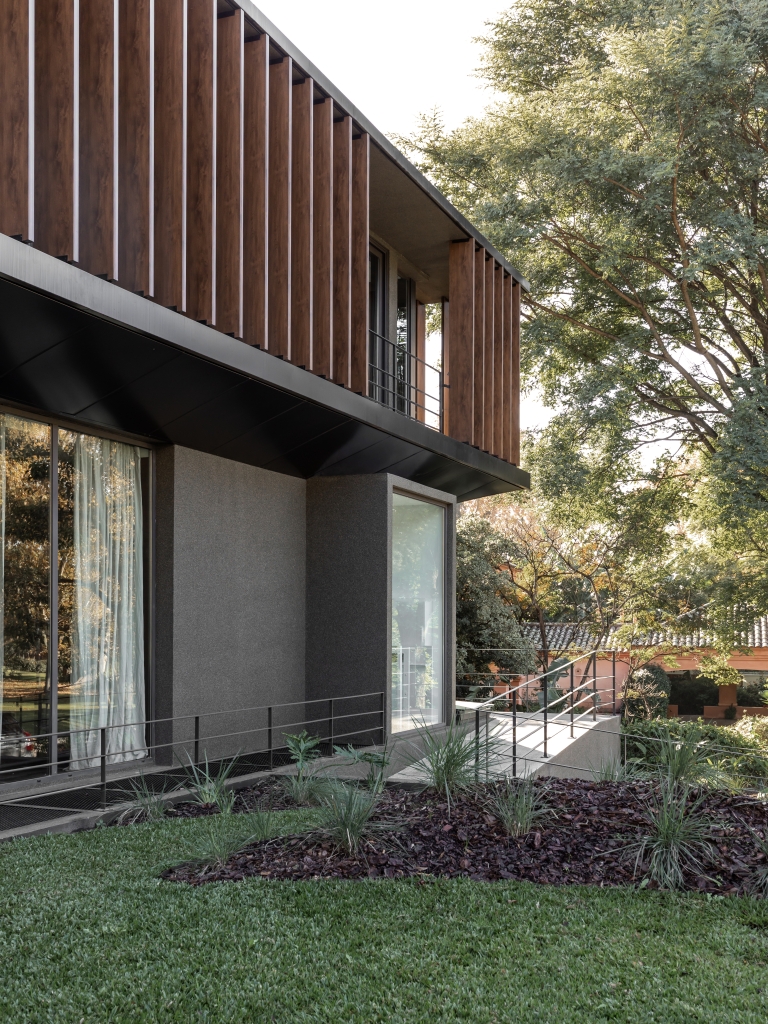
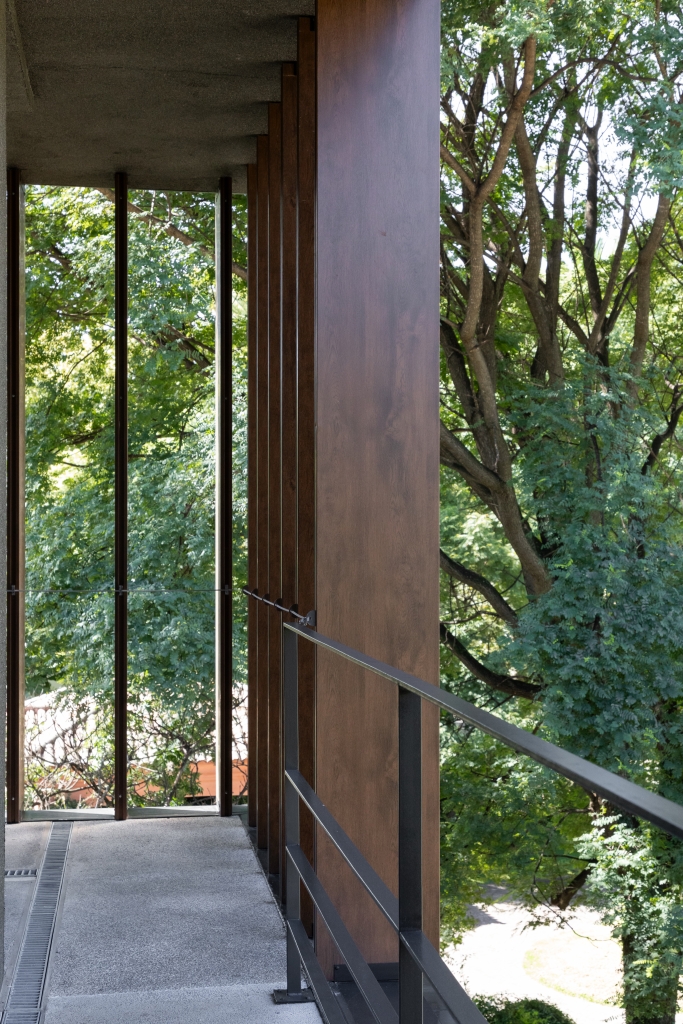
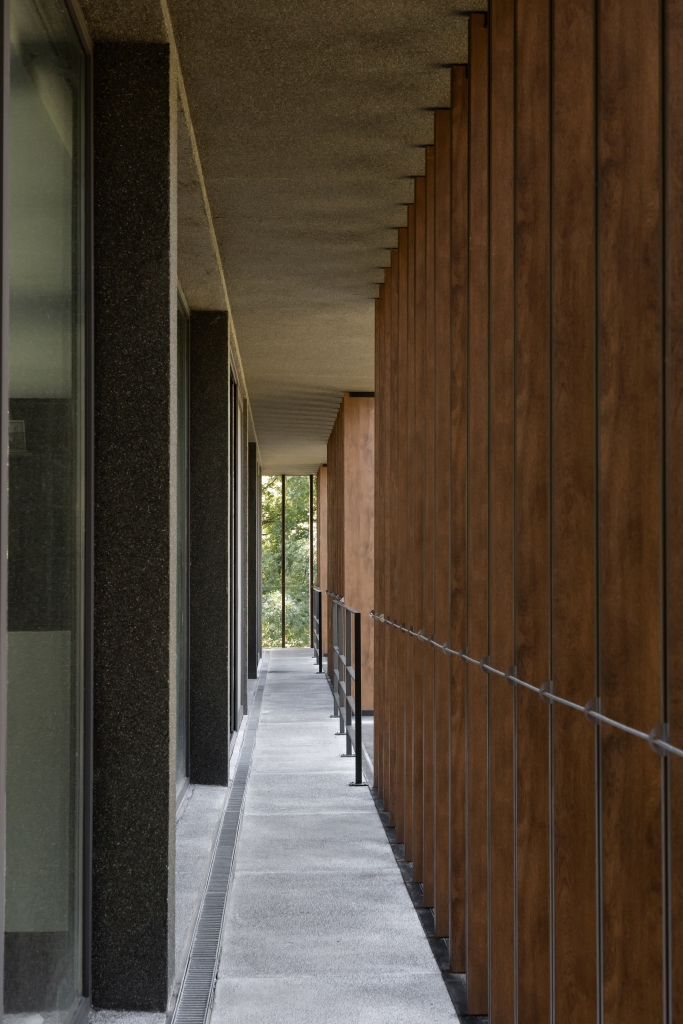
On the basement level, a gym is directly connected to the semi-Olympic pool through a landscaped ramp, consolidating a fluid transition between indoor and outdoor spaces and ensuring that the garden remains the predominant view from all areas of the house, even from leisure spaces. All rooms, except the playroom, enjoy open views of the park and the distant landscape, including the historic Castillo de Pacheco. The upper floor features strategically placed sunshades that not only provide solar protection but also frame precise views, transforming each opening into a carefully composed scene.
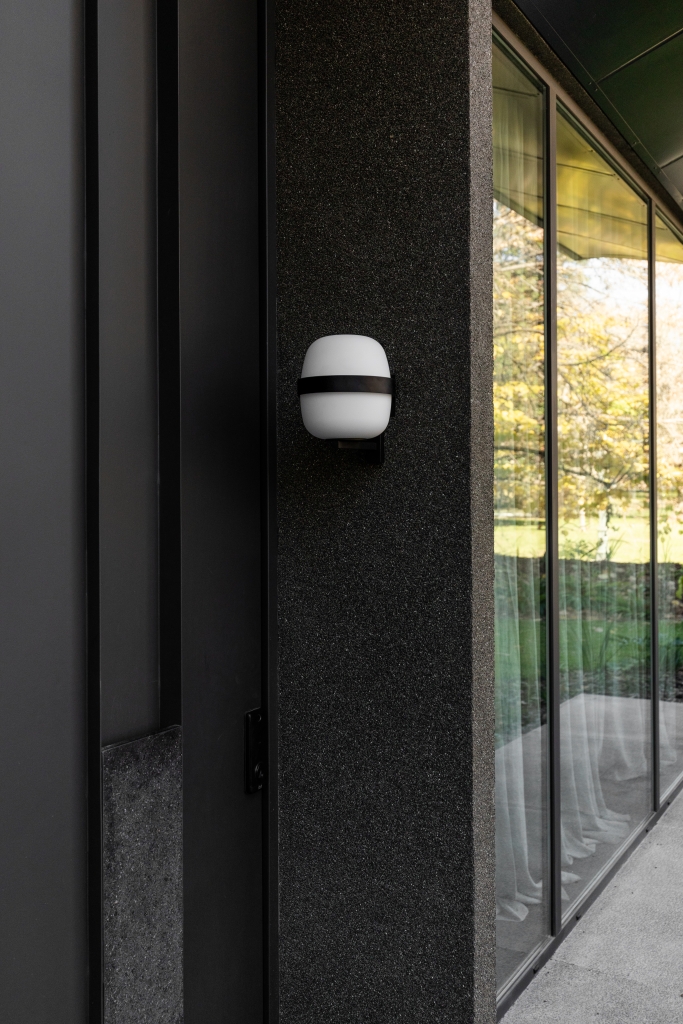
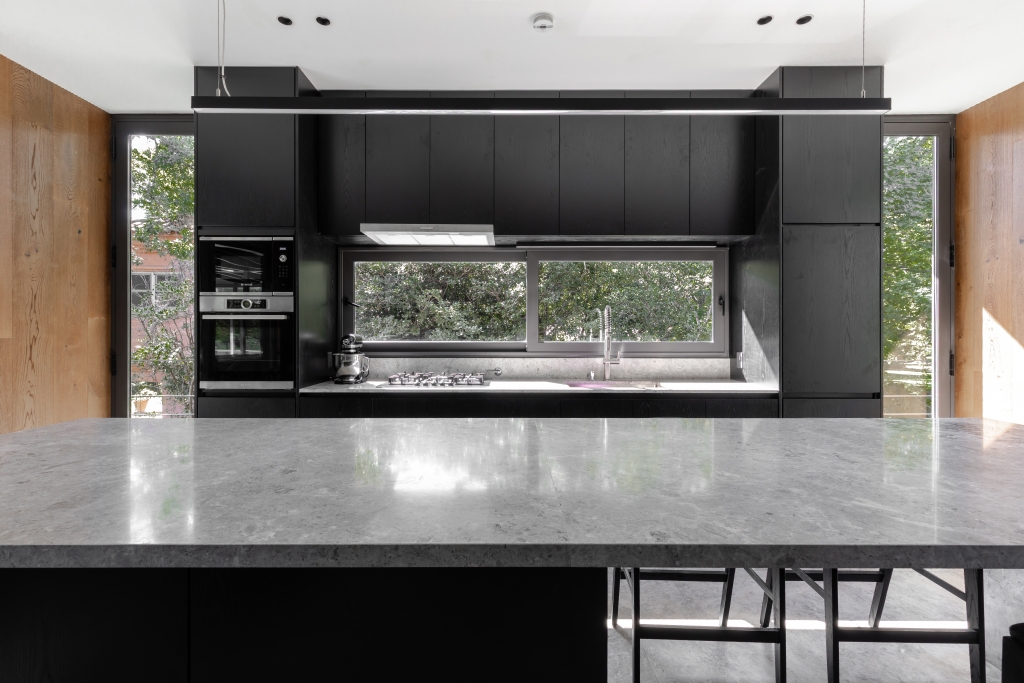
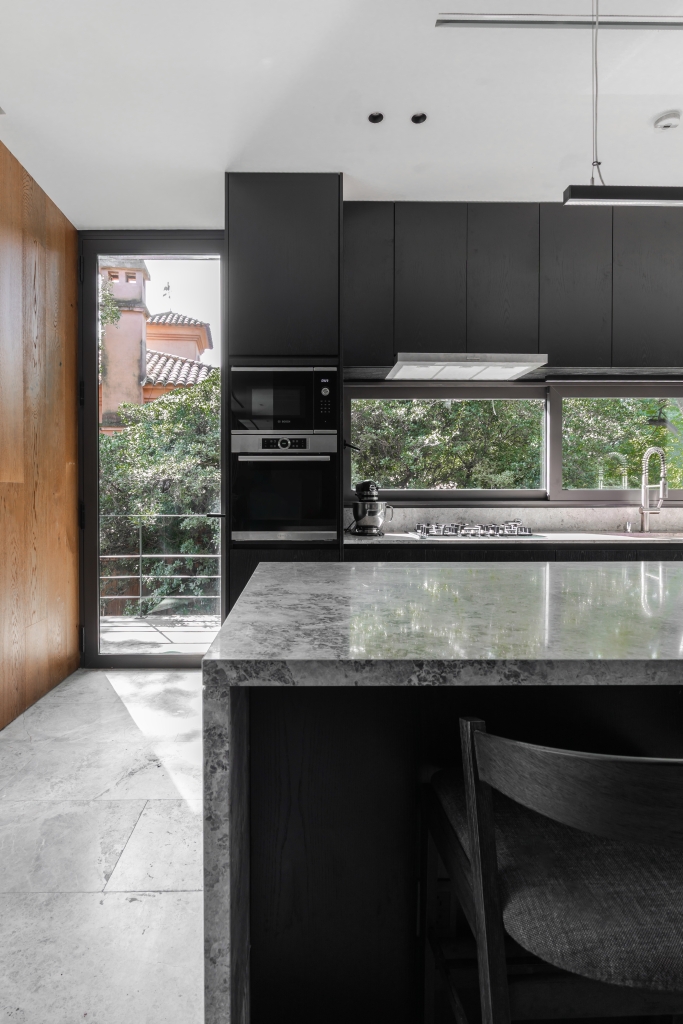
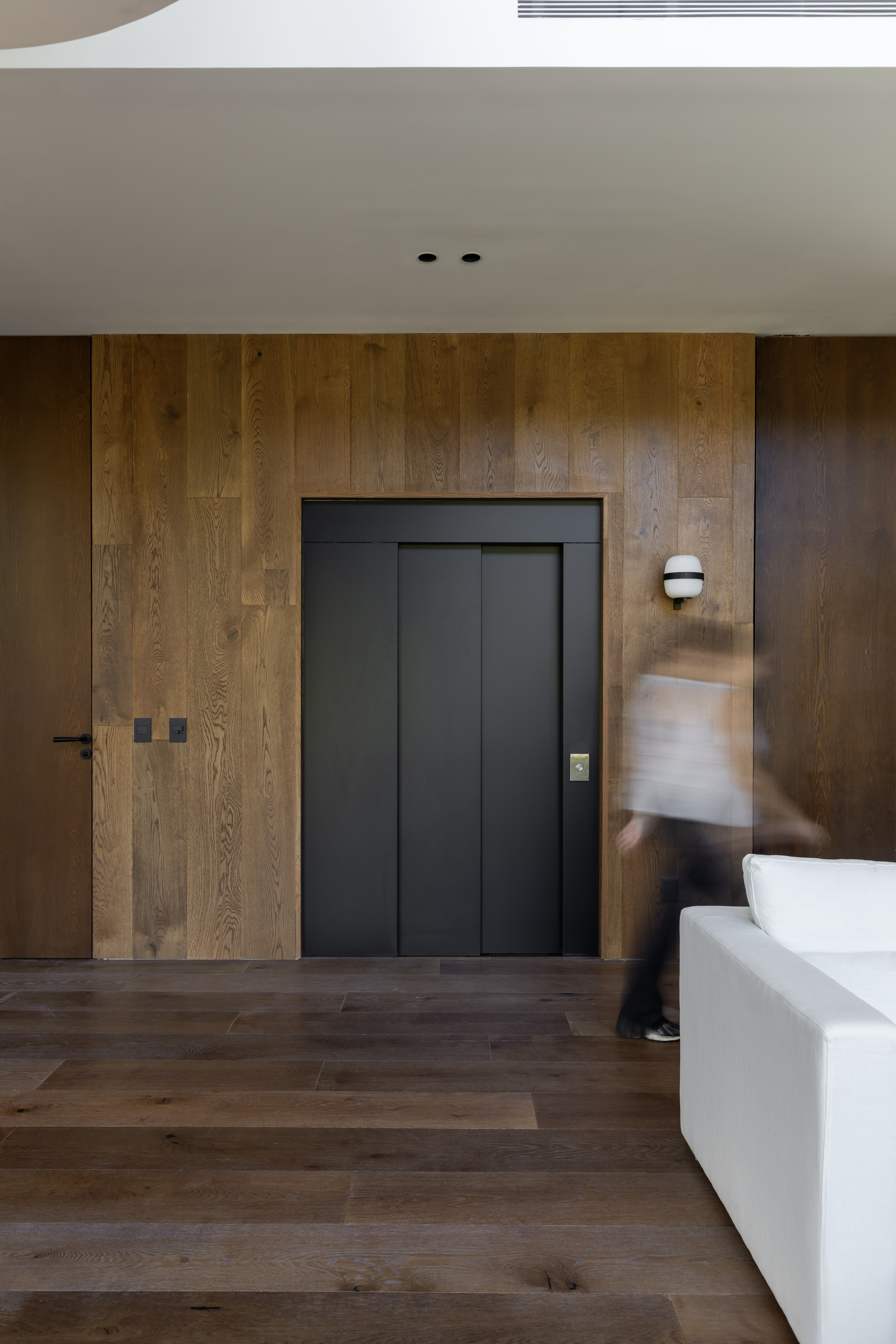
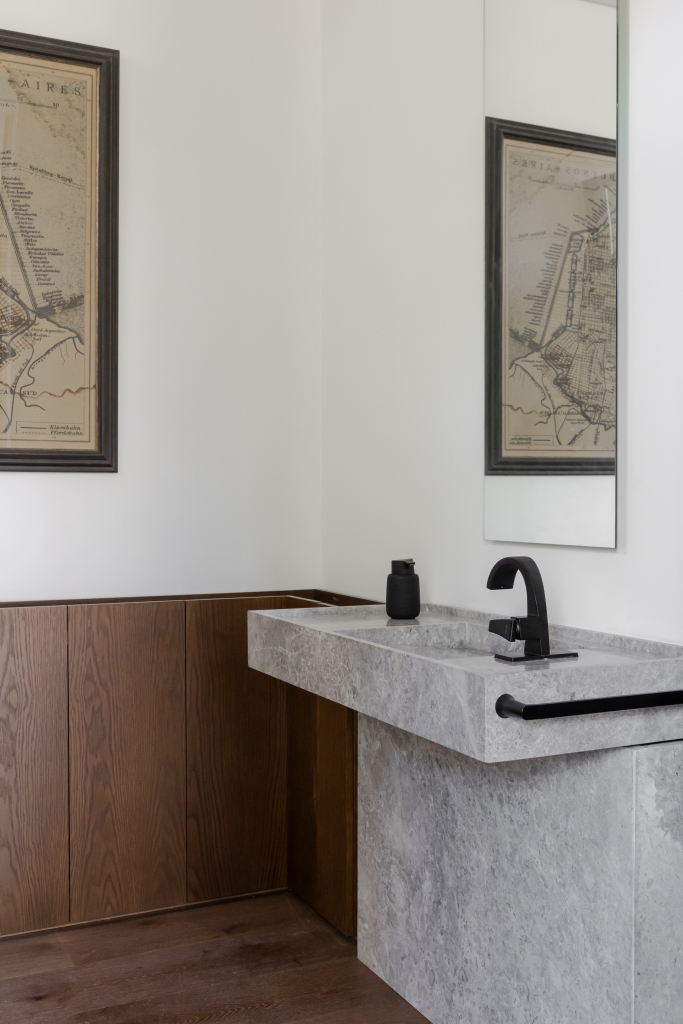
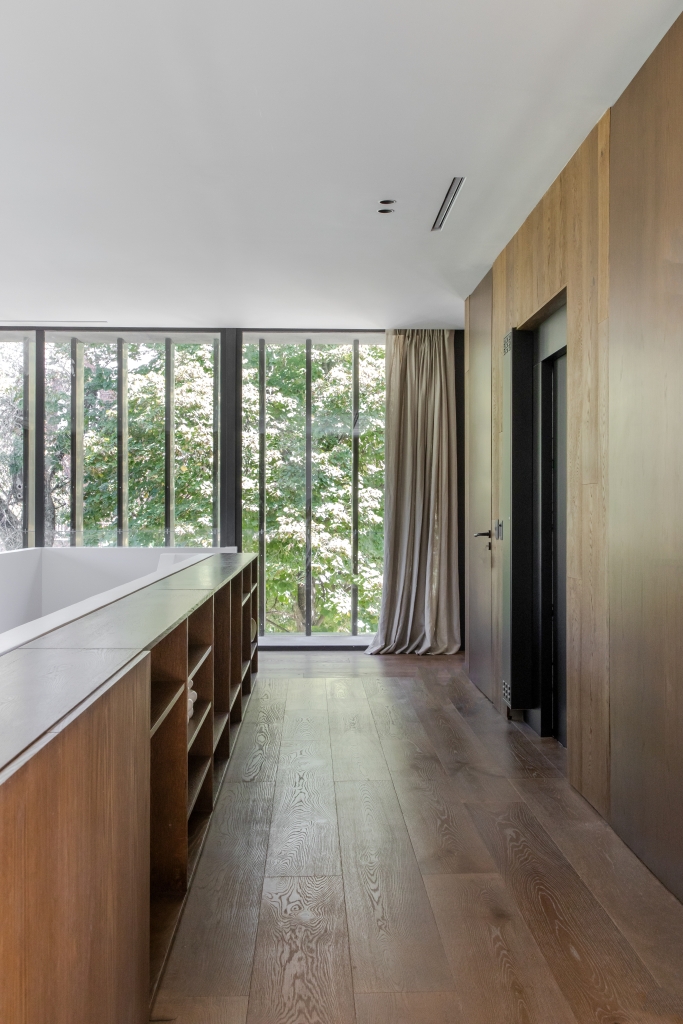
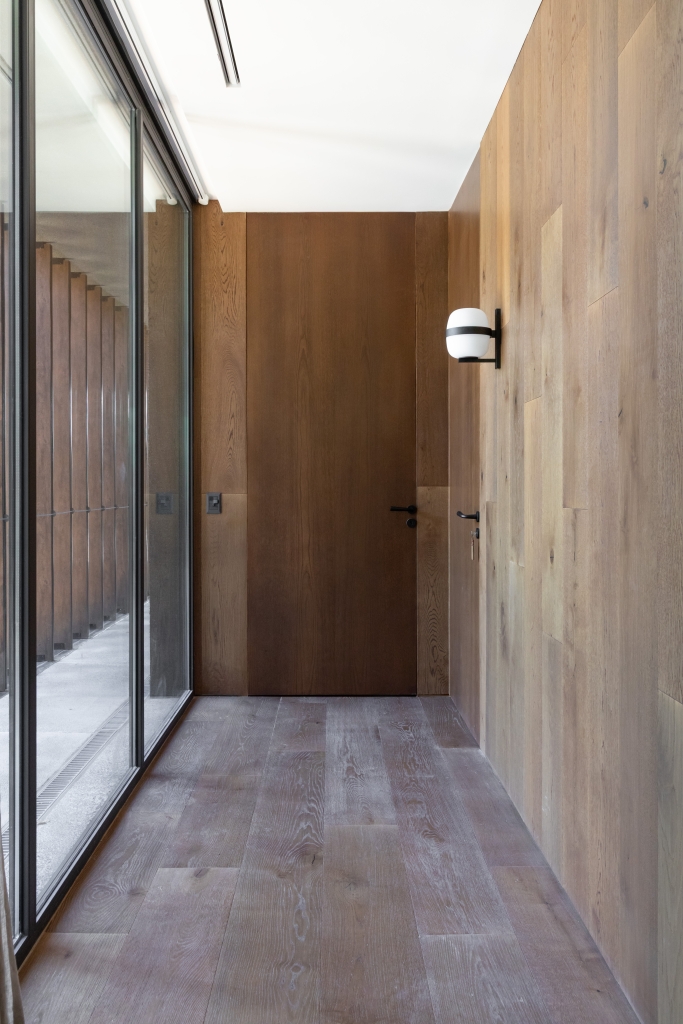
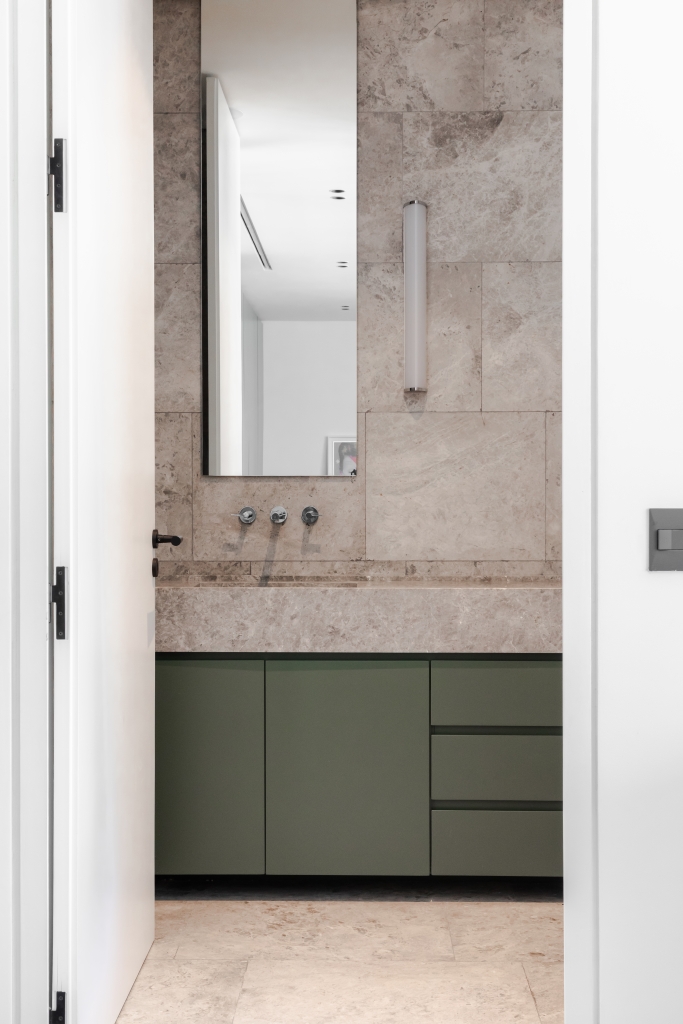
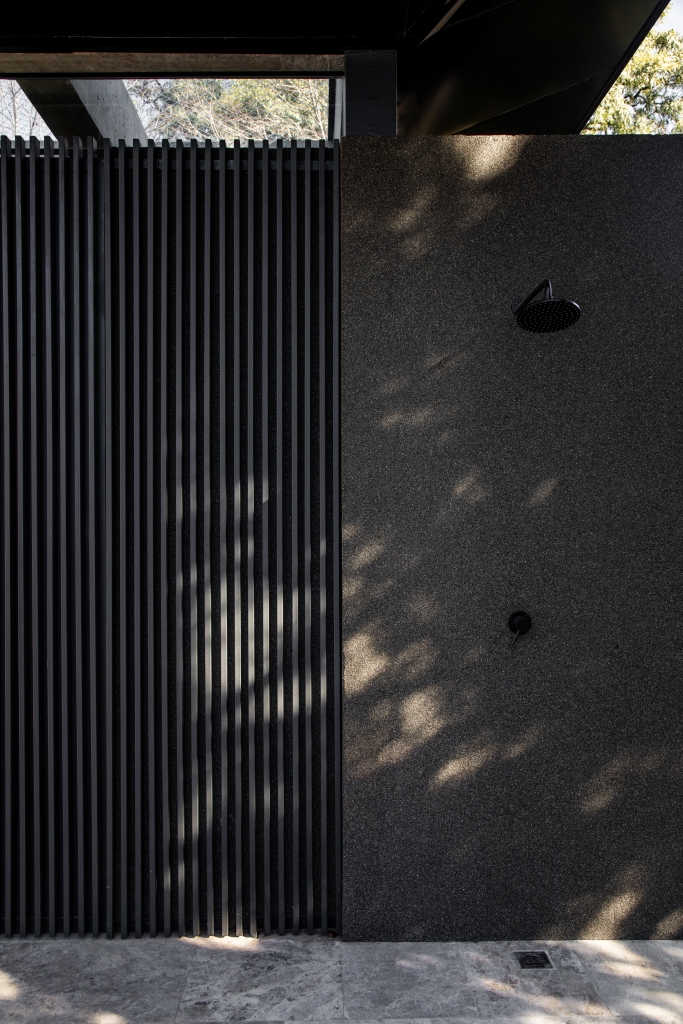
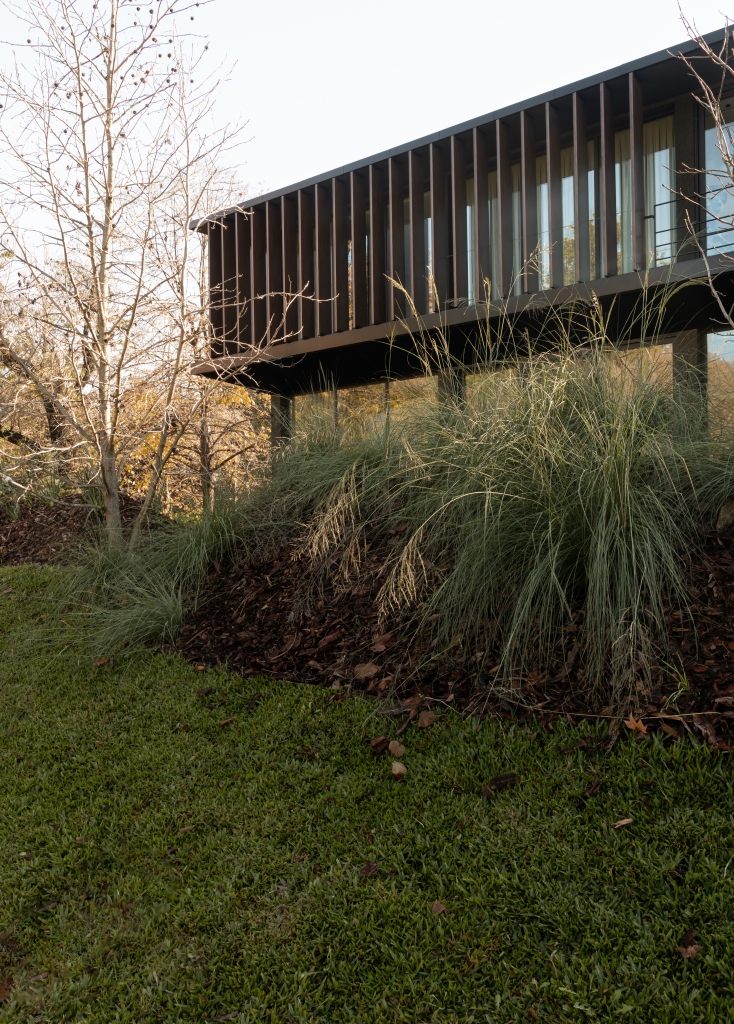
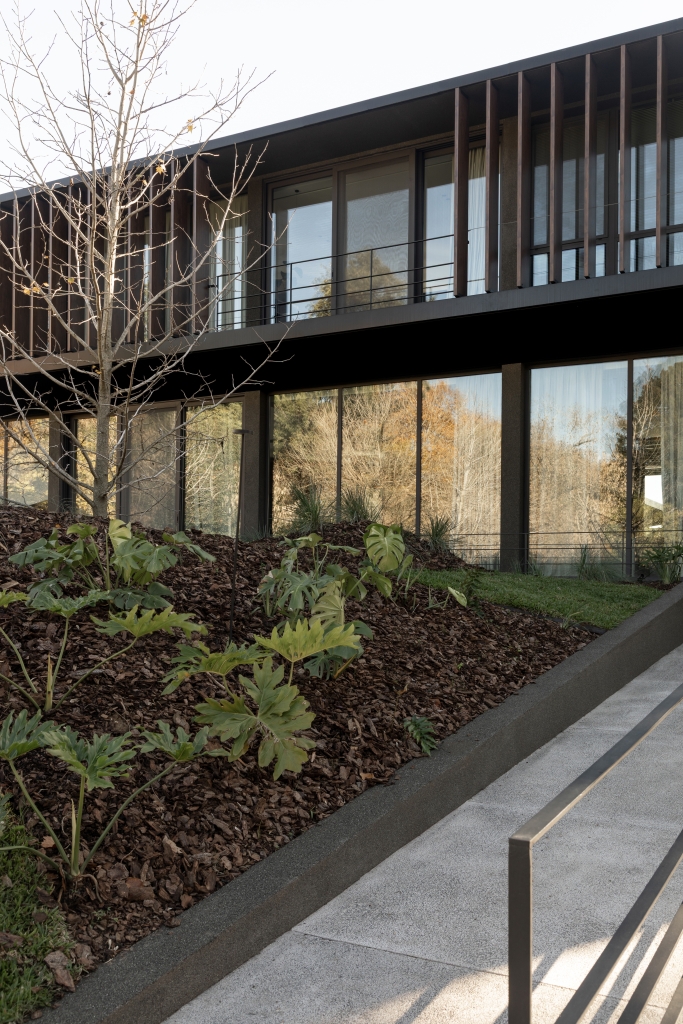
The volumetry emphasizes horizontality and the contrast between transparency and opacity: a light, glazed ground floor supports a more solid upper level, whose wide, inclined eaves convey the sensation of a volume suspended over the topography. The material palette combines a steel structure and reinforced concrete slabs with high-performance glass enclosures, anodized aluminum frames, metallic panels and louvers, and the cobogó lattice as a defining element on the street-facing façade. The interiors employ a neutral palette, with wooden floors that add warmth.
The result is a residence that balances openness and shelter, transparency and mass, intense social life and family intimacy. Its siting, façade treatment, and control of views establish a harmonious relationship with the surrounding landscape, making the environment not merely a backdrop but an essential part of the architectural experience.